

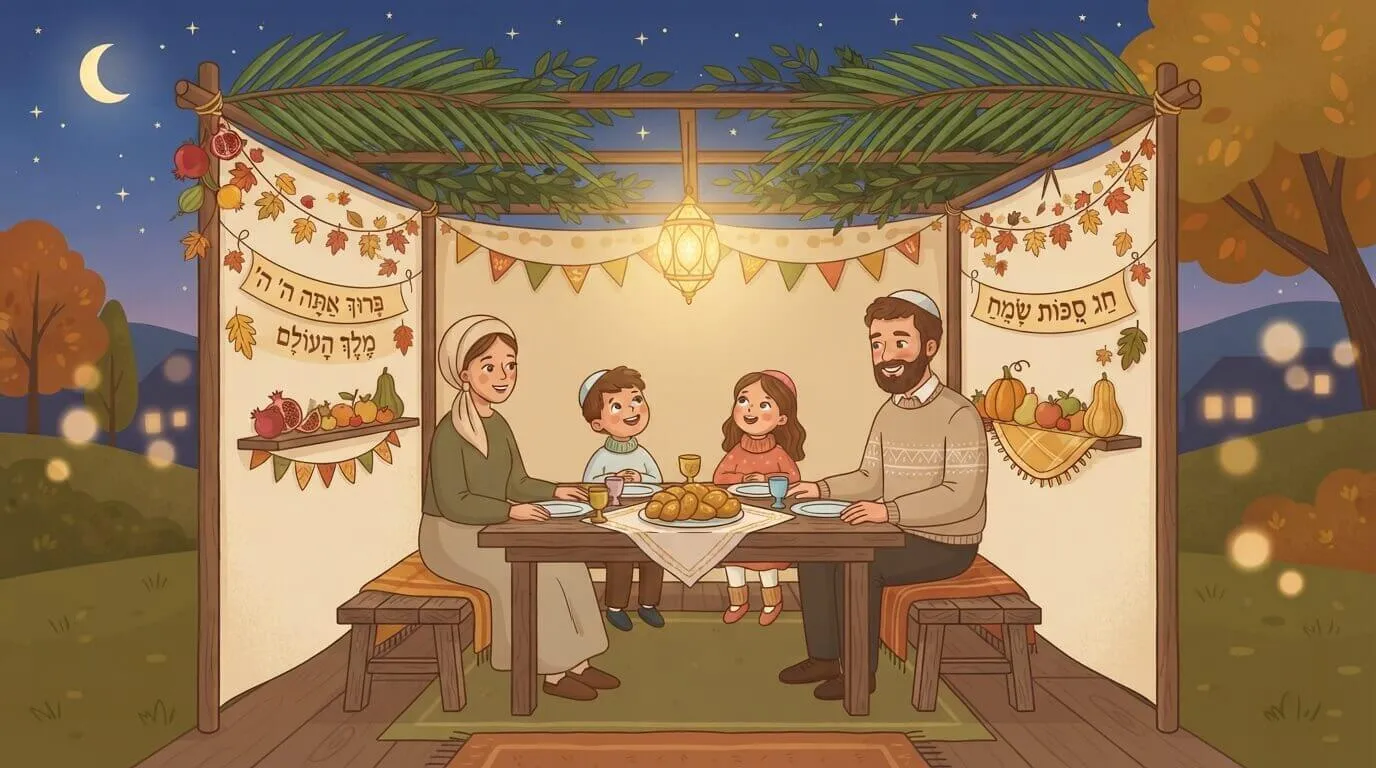
My daughter’s first question about a sukkah was whether the people who built it had run out of roof. She was four. I said no, they’d left it like that on purpose, and she gave me a look that suggested she thought I was covering for them.
She wasn’t wrong to ask, though. A sukkah does look unfinished, and the gappy roof is the whole point, and if nobody’s ever explained it to you then it’s a perfectly sensible thing to be confused by. So What is Sukkot without the jargon. Short enough to read aloud, simple enough that a five-year-old won’t wander off halfway. There’s a free printable at the bottom as well, a poster to colour and a fill-in page, because in my experience kids remember things they’ve written down themselves far better than things they’ve been told.
What Is Sukkot, in One Minute
It’s a Jewish festival in autumn, a few days after Yom Kippur. Families build a small hut outside, in a garden, on a balcony, sometimes in the car park behind the synagogue, and then for a week they eat their meals in it. Plenty of people sleep in it too, weather permitting.
There are two reasons behind it. One is harvest. It’s a thank you for the food that’s been gathered in. The other reaches much further back, to a time when the Jewish people were travelling through the desert and living in shelters they put up and took down as they went.
The Sukkah, and That Roof
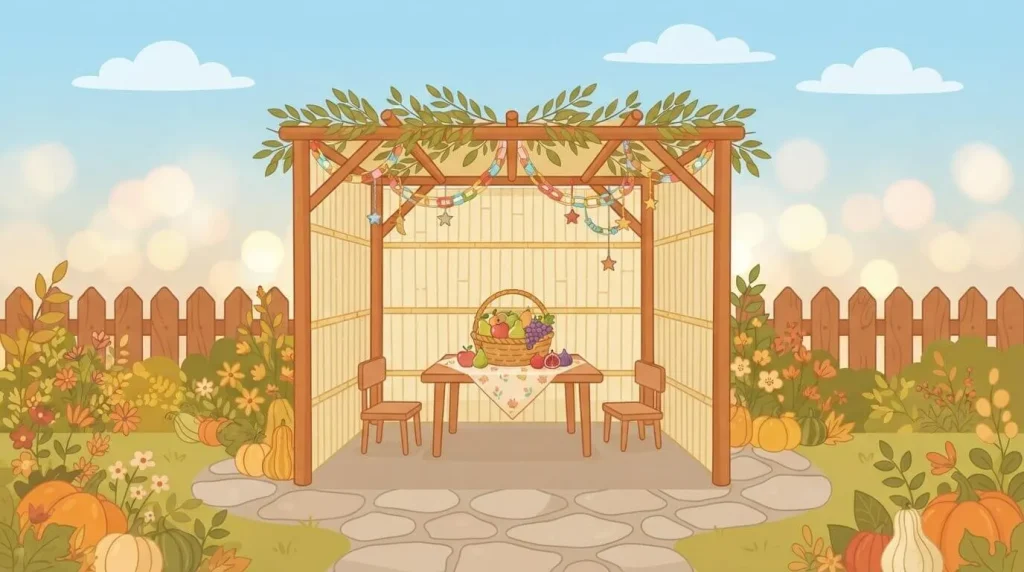
The hut’s called a sukkah. Walls, a floor, and a roof made of cut branches and leaves. The roof has its own name, schach.
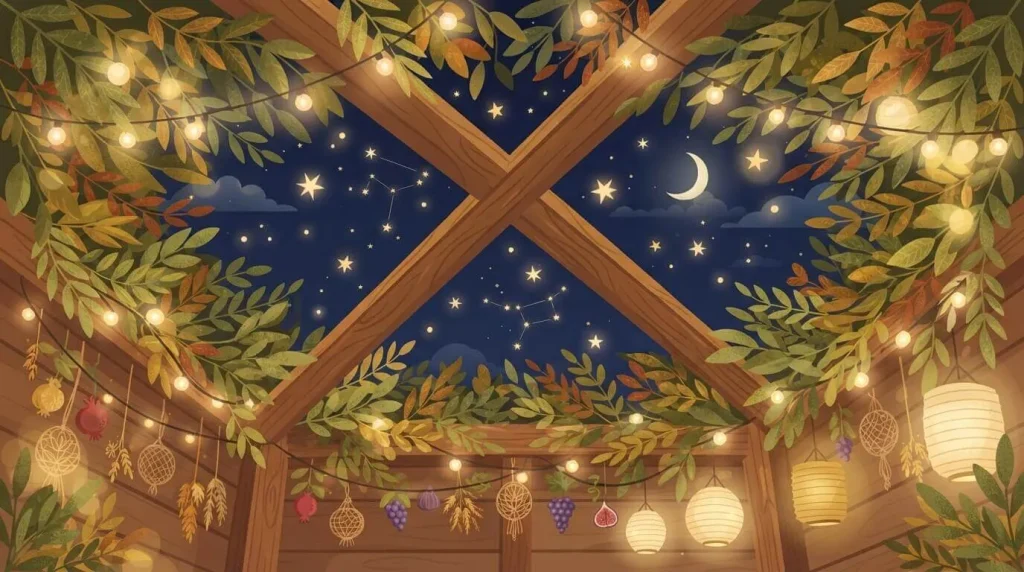
And it’s supposed to be gappy. You should be able to see sky through it during the day and stars through it at night. Kids nearly always assume this is a mistake before deciding it’s the best part, which is roughly the reaction it’s meant to get. The gaps are there to remind you the shelter is temporary and the sky hasn’t gone anywhere.
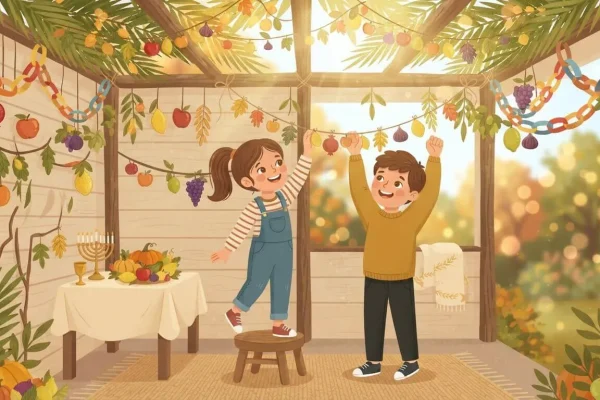
Decorating is usually handed to the children, which explains a lot about how most sukkahs look. Paper chains, fruit hanging from the beams, drawings taped up crooked. If yours ends up a bit chaotic then you’ve understood the assignment.
That Bundle of Plants
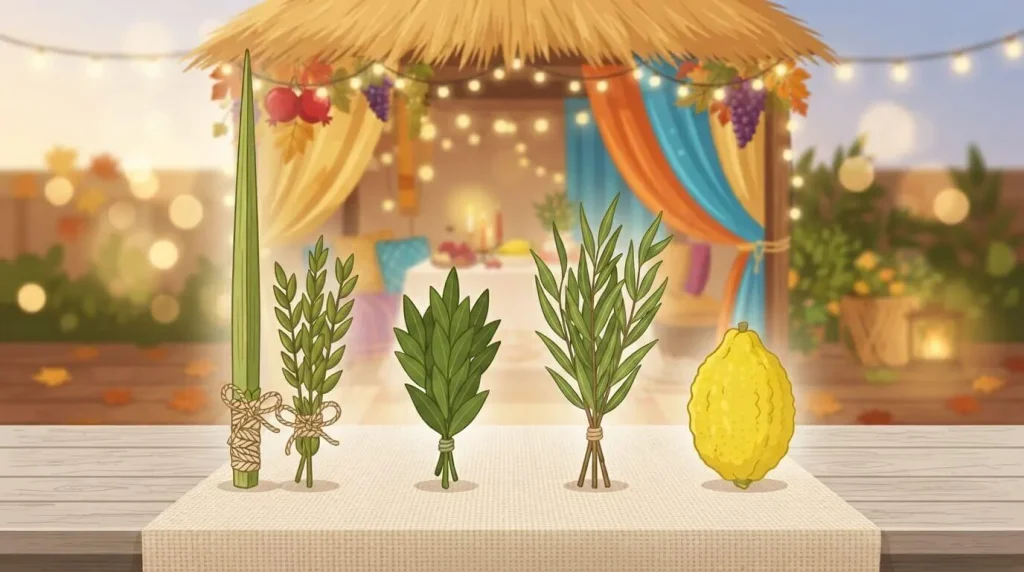
At some point you’ll see someone holding a bundle of greenery and giving it a gentle shake. That’s the four species, arba minim in Hebrew.
It’s a tall palm branch called a lulav. Three sprigs of myrtle, hadass. Two willow branches, aravah. Those three get tied together and held in one hand. In the other hand goes the etrog, a citron, which is a bumpy yellow fruit that looks like a lemon that’s had a difficult year.
I still have to think for a second about which side the myrtle goes on, for what it’s worth. If your child wants the full tour of all four, we’ve got a lulav and etrog craft they can colour in and build.
Why a Whole Week
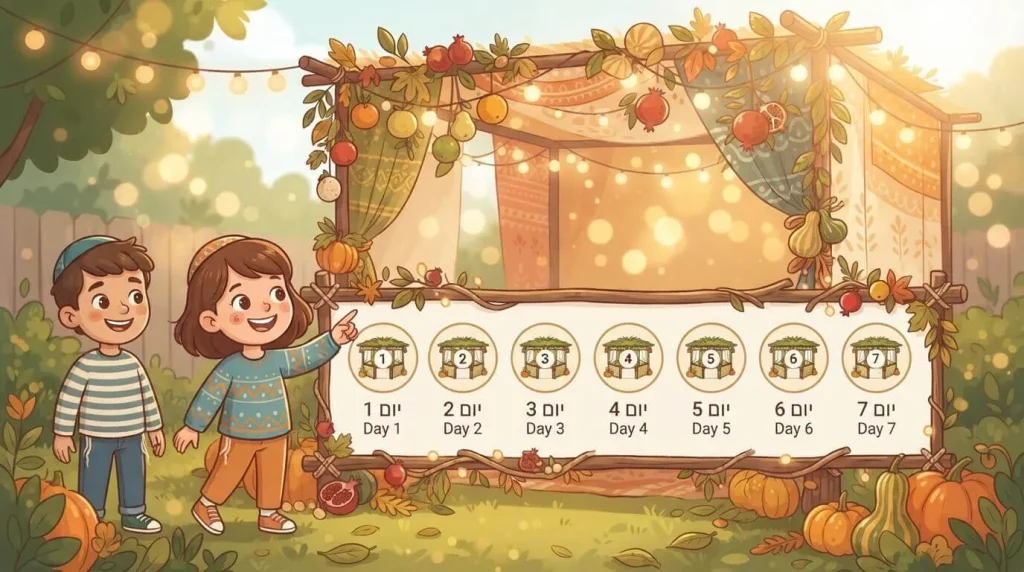
Seven days. Outside Israel there’s a separate festival, Shemini Atzeret, that starts the moment Sukkot finishes, which is why you’ll hear people say eight days and why the counting can get confusing.
The length is half the appeal, honestly. Nobody’s trying to fit the whole thing into one Saturday afternoon. Meals drift outside, friends turn up, and for a week everyone’s just a bit more outdoors than usual.
For 2026 it runs from sundown on Friday 25 September to nightfall on Friday 2 October.
Wait, Is It Called Something Else?
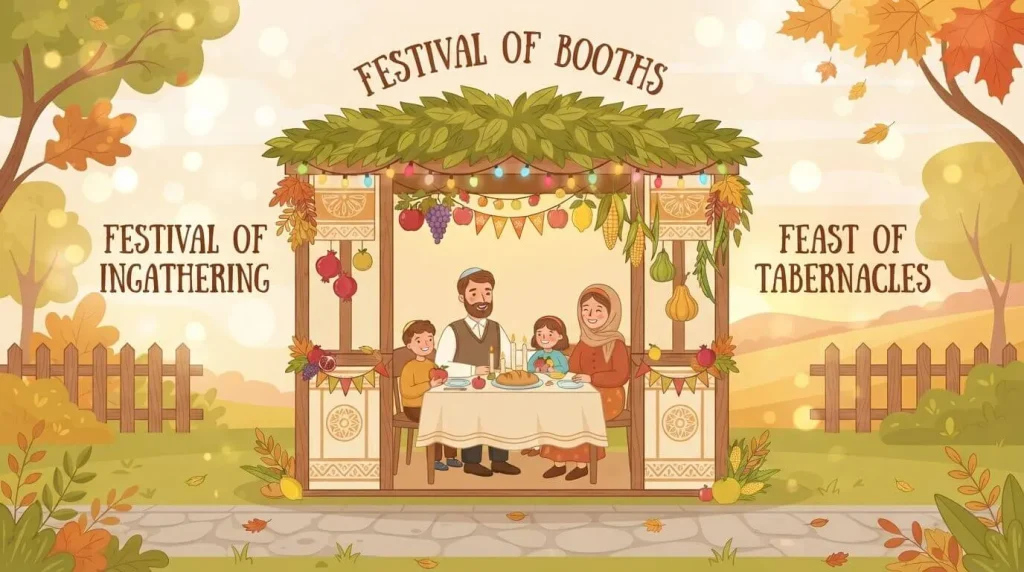
Yes, and this trips people up constantly. Feast of Tabernacles, Festival of Booths, Sukkot. Same festival. Tabernacle and booth are just old English words for the hut, so the names are all pointing at the same thing from different directions.
You might also hear Festival of Ingathering, which is the harvest angle, or Season of Our Rejoicing, which is more about the mood of the week.
If You’re Coming to This Cold
Maybe a friend of your child’s celebrates it, or it came up at school, or you’re just curious. You don’t need a garden, and you certainly don’t need a building project.
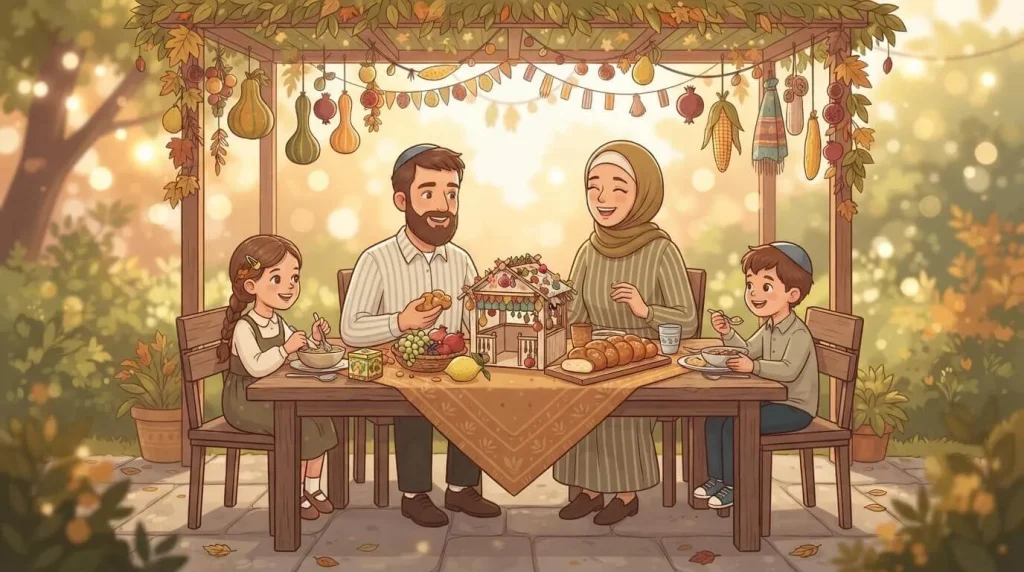
Read something about it together first, even five minutes. Make a paper sukkah on the kitchen table. Eat outside if it isn’t raining. Invite somebody over, because welcoming guests is genuinely part of the festival and even has its own word, ushpizin. And go outside in the evening and look up, which takes no effort at all and is closer to the point than most things you could do.
Things Kids Will Actually Sit Still For
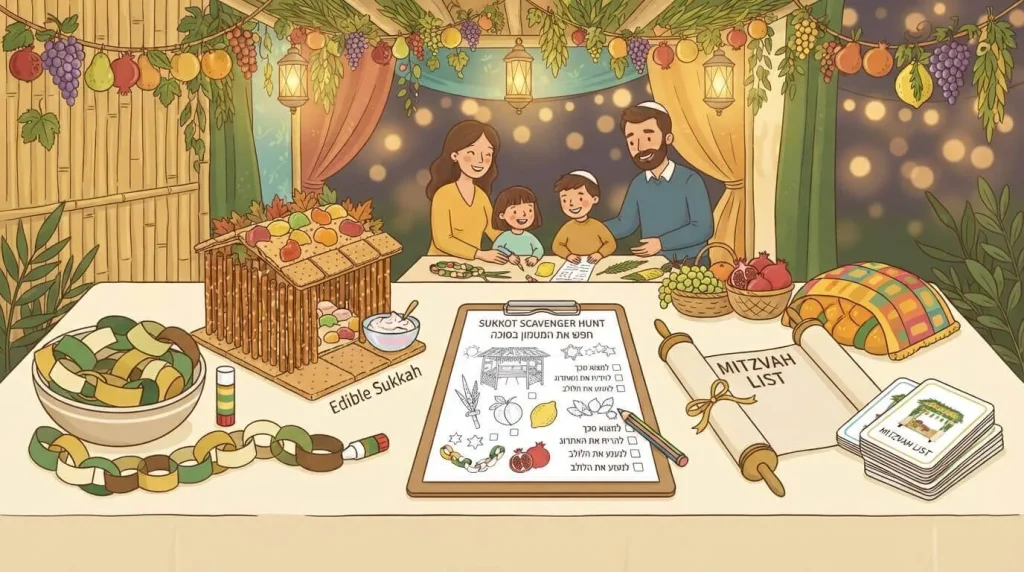
Paper chains are the reliable one. A three-year-old can turn out an absurd quantity of paper chain and will be thrilled about all of it.
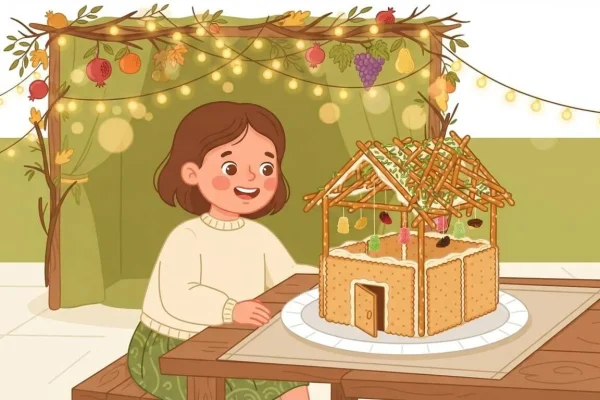
Beyond that, a paper sukkah to build and decorate, a sukkah scene to colour, a scavenger hunt round the garden. The edible sukkah, biscuits and icing, is always the most requested and always the messiest. And there’s one we come back to every year, where they draw who they’d invite into their sukkah. My son once picked a dinosaur and his grandmother, in that order, and I’ve never quite recovered.
Download the Free All About Sukkot Printable (PDF)
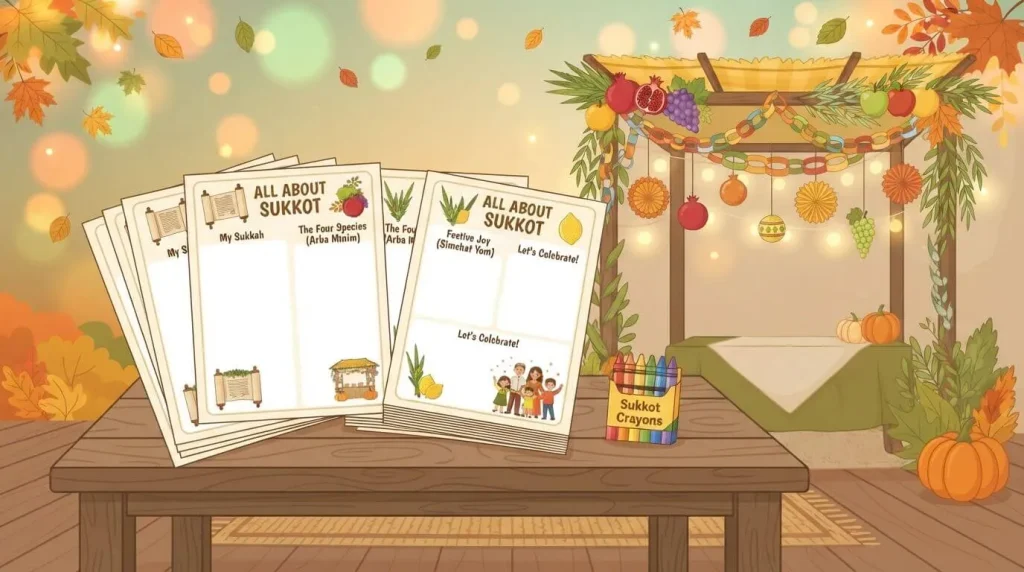
There’s an all about Sukkot poster to colour, a fill-in page where they write down what a sukkah is and name the four plants, and a picture page with the sukkah, the roof and the species laid out. One free PDF, no email, no sign-up.
Download the Free Printable
⬇ Download PDF (Free)More Sukkot Fun
Once they know what it is they’ll want to make something, and that’s the right instinct. There’s our sukkot crafts for kids hub, a paper sukkah craft to build, sukkot coloring pages for the quieter half of the afternoon, and a sukkot activities for kids pack for when it rains.
Learn More from Jewish Sources
This page exists to make the festival easy to explain. It isn’t a substitute for learning it properly, and for that you want the people who actually live it. Chabad.org’s Sukkot for Kids section is lovely, and My Jewish Learning is warm and clear without being heavy going. Read a bit of either one aloud before you start cutting and gluing and the whole thing lands better.
Quick Questions
What is Sukkot in simple terms?
A Jewish autumn festival where families build a small hut with a leafy roof and eat in it for a week. It’s a thank you for the harvest, and a reminder of when the Jewish people lived in temporary shelters in the desert.
What is Sukkot called today?
Sukkot, the Feast of Tabernacles, or the Festival of Booths, all the same thing. Tabernacle and booth are old English words for that hut. You’ll also come across Festival of Ingathering and Season of Our Rejoicing.
How do you celebrate Sukkot if you’re new to it?
Read about it together, make something like a paper sukkah, eat a meal outside, invite a guest, and look up at the sky in the evening. You don’t need a real sukkah to mark it properly.
What are some fun Sukkot activities for kids?
Paper chains, decorating a sukkah with hanging fruit, colouring a sukkah scene, a garden scavenger hunt, building an edible sukkah out of biscuits, and drawing the guests they’d invite.
How long does Sukkot last?
Seven days, with Shemini Atzeret following straight after outside Israel, which is where the eight days you sometimes hear about comes from.
When is Sukkot in 2026?
Sundown on Friday 25 September through nightfall on Friday 2 October.

Leave a Reply