
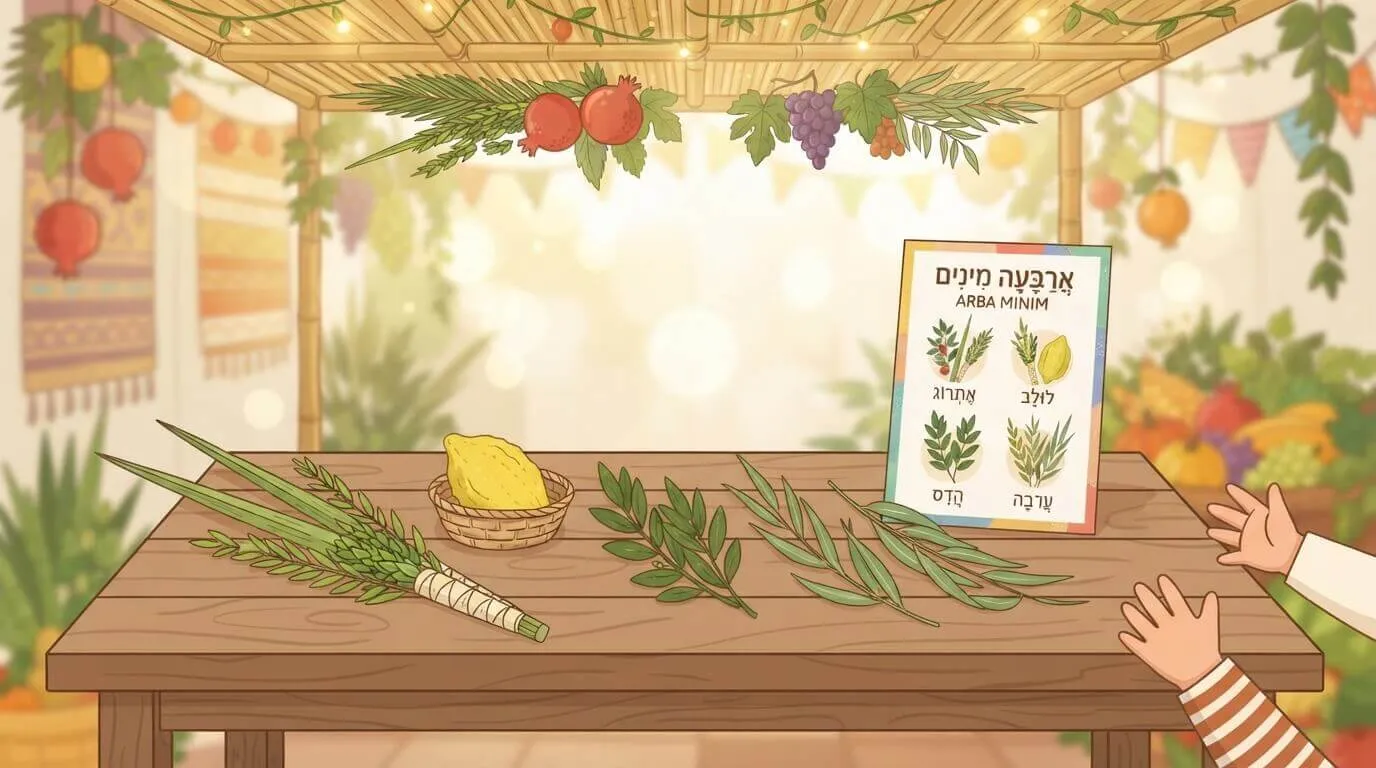
One of the things kids ask about most at Sukkot is the odd little bundle of plants everyone’s waving about. What are they, why four, and why is one of them a bumpy lemon? This four species of Sukkot printable answers all of that in a way a child can follow, with a colour-in poster and a label-the-plants page so the names actually stick. If you’re teaching Sukkot at home, in a classroom, or in Sunday school, this is the page that makes the four species click.
Here’s a quick plain guide to each one, then the printable.
What Are the Four Species?
The four species, or arba minim, are four plants that get held together and gently waved during Sukkot. There are four of them, and each one is a bit different, which is part of what makes them fun for kids to learn. Here they are, one by one.
The Lulav (Palm)
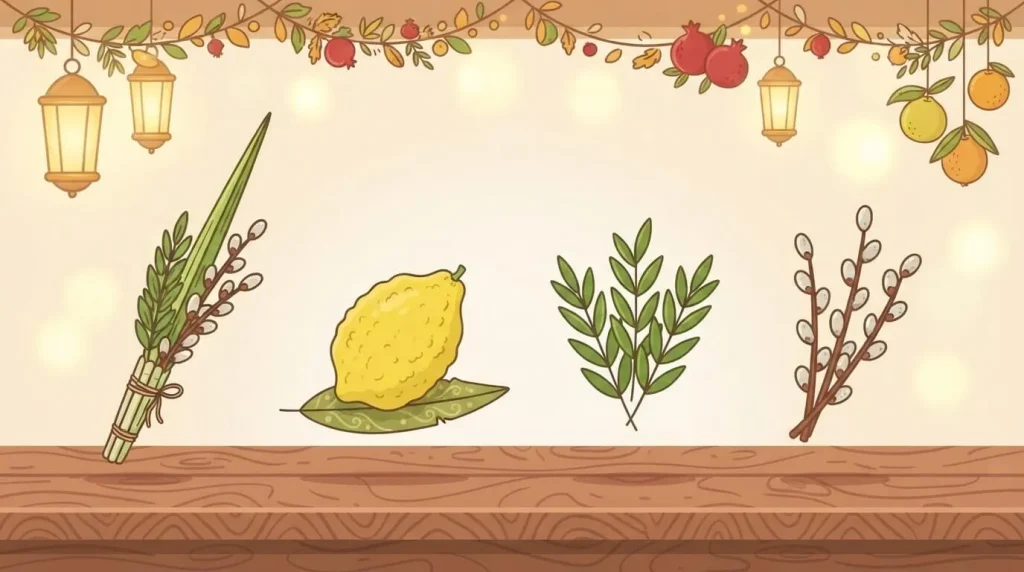
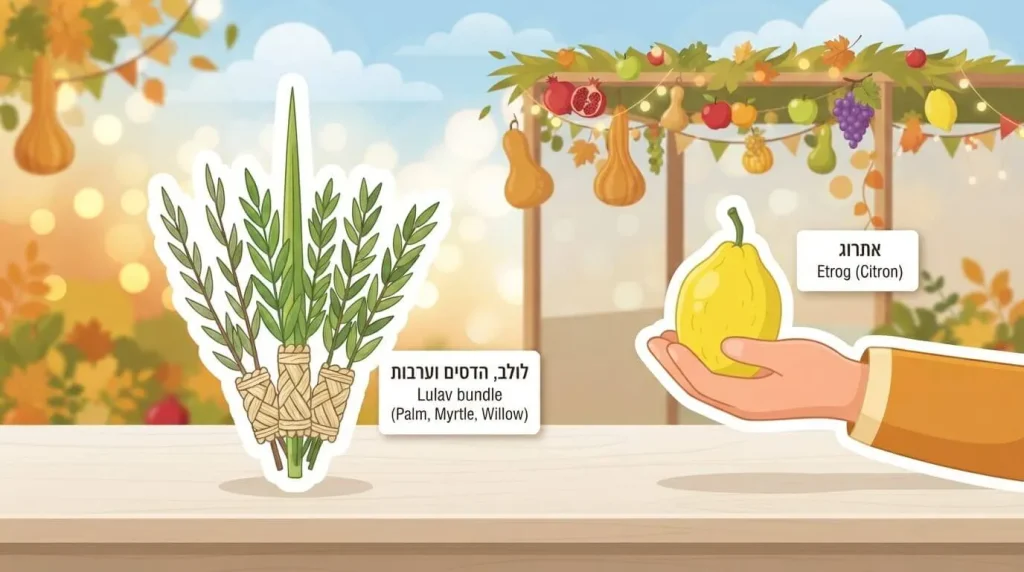
The lulav is the tall one, a palm branch, and it’s the piece that does most of the waving. It’s what most people picture first when they think of Sukkot. In the bundle, the lulav sits in the middle.
The Etrog (Citron)
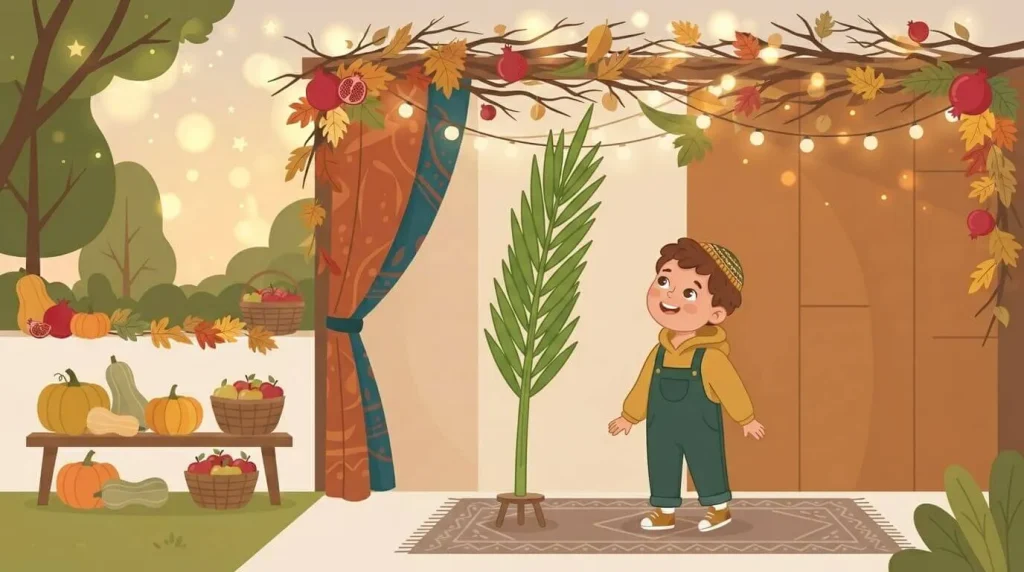
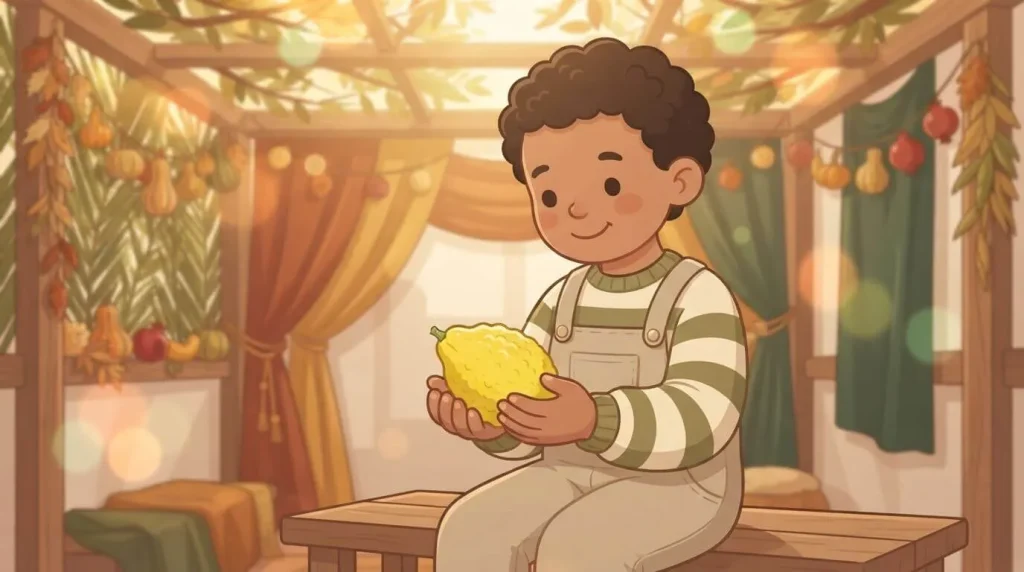
The etrog is the one kids love, because it’s a bumpy yellow fruit that looks like a knobbly lemon. Its proper name is a citron. It smells lovely, and it’s held separately in the other hand rather than bundled with the branches.
The Hadass (Myrtle)
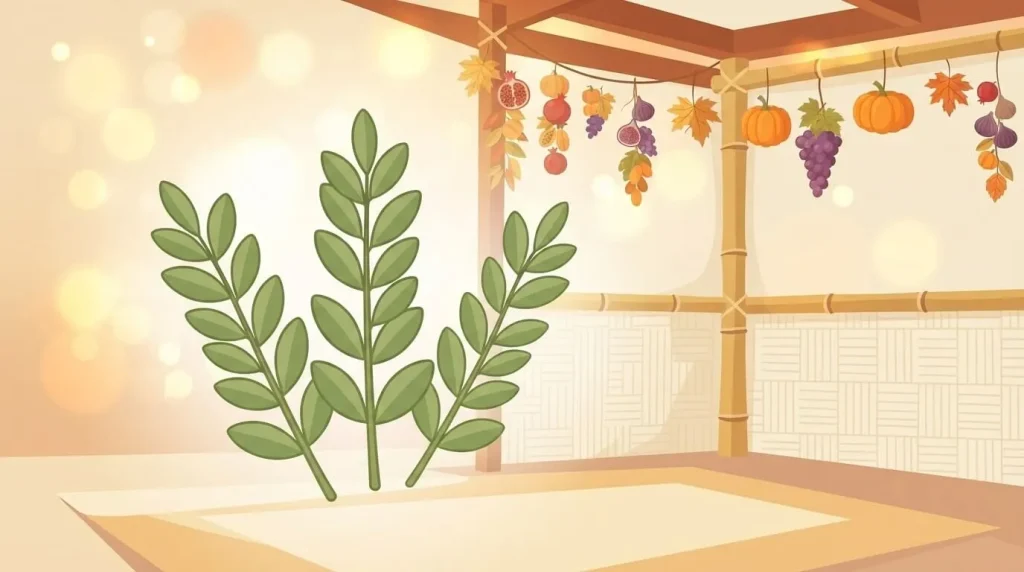
The hadass is myrtle, a leafy green branch, and you use three of them. In the bundle, the three myrtle branches go on the right side of the lulav.
The Aravah (Willow)
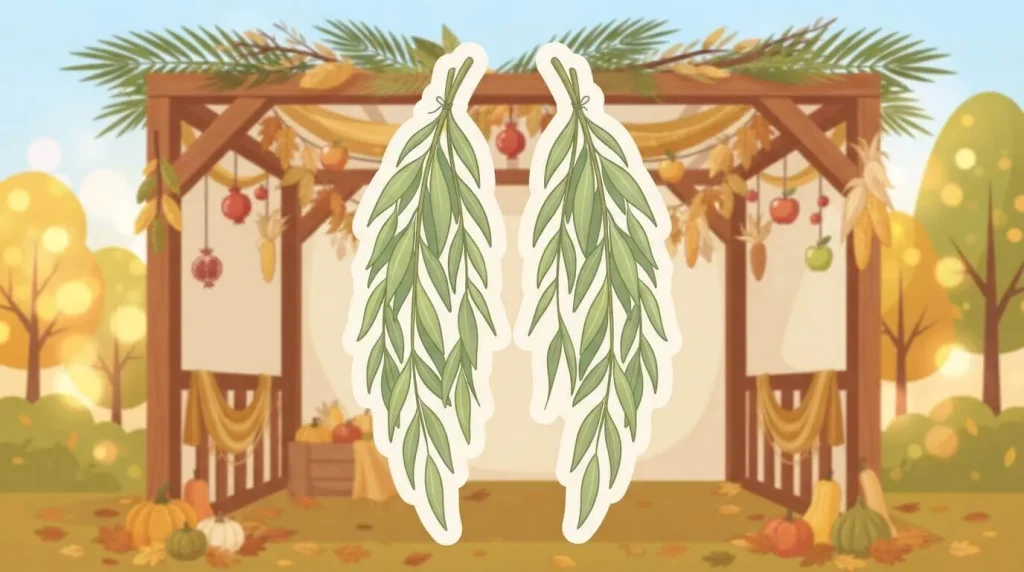
The aravah is willow, another leafy branch, and you use two. The two willow branches go on the left side of the lulav. So the full set is one palm, one etrog, three myrtle and two willow.
How They’re Held
Here’s the bit kids find satisfying, because it’s almost like a formula. You bundle the lulav, myrtle and willow together, palm in the middle, three myrtle on the right, two willow on the left. You hold that bundle in one hand and the etrog in the other, bring them together, and give a gentle shake in each direction. Our printable shows this simply so a child can see exactly where each plant goes.
Download the Free Four Species Printable (PDF)
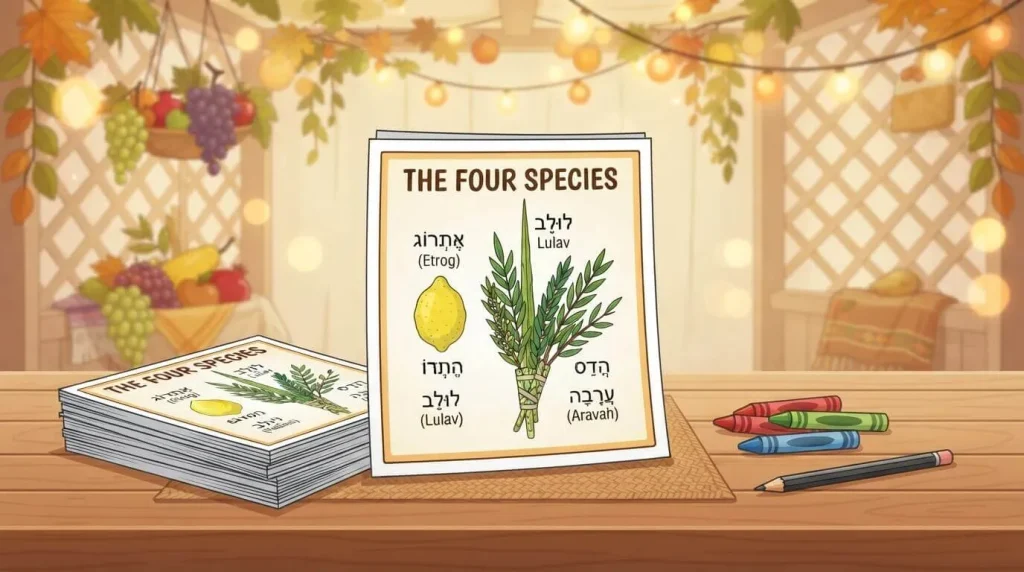
The pack has a colour-in poster of all four plants labelled, a “label the four species” page where kids fill in the names, and a simple “how they’re held” diagram. All in one free PDF, no email, no sign-up.
Download the Free Printable
⬇ Download PDF (Free)Turn It Into a Craft
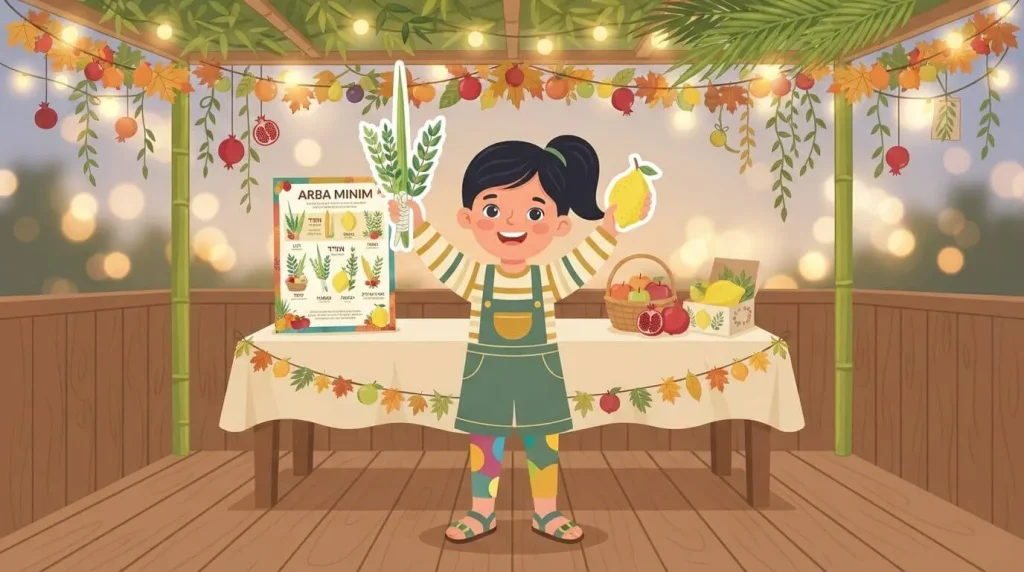
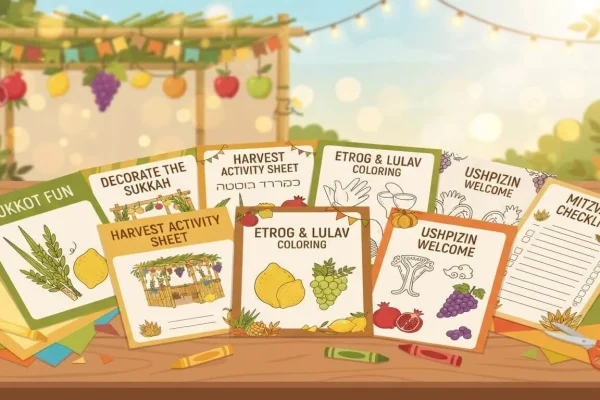
Once they know the names, making a set really cements it. Our lulav and etrog craft lets kids colour, cut and build their own four species to hold and wave, and it pairs perfectly with this printable. See the whole festival in our sukkot crafts for kids hub, and colour along with our sukkot coloring pages.
Learn More (from Jewish Sources)
For the tradition told properly, by people who live it, Chabad.org’s Sukkot for Kids section and My Jewish Learning both explain the four species beautifully. A quick read-aloud alongside the printable makes it land even better.
Quick Questions
What are the four species of Sukkot?
The lulav (palm), etrog (citron), hadass (myrtle) and aravah (willow). One palm, one etrog, three myrtle and two willow, held and waved together during the festival.
What is a four species printable?
A free, kid-friendly page (or set of pages) that names and explains the four plants, usually with a colour-in poster and a label-the-species activity to help children learn them.
How are the four species held?
The palm, myrtle and willow are bundled together, palm in the middle, three myrtle on the right, two willow on the left, held in one hand, with the etrog held in the other.
Is the printable free?
Yes. The poster, the label page and the diagram are all in one free PDF, no sign-up. Just don’t resell it.
When is Sukkot in 2026?
Sundown on Friday, September 25 through nightfall on Friday, October 2.


Leave a Reply